Archives
-
IEJEE
Vol. 18 No. 4 (2026) -
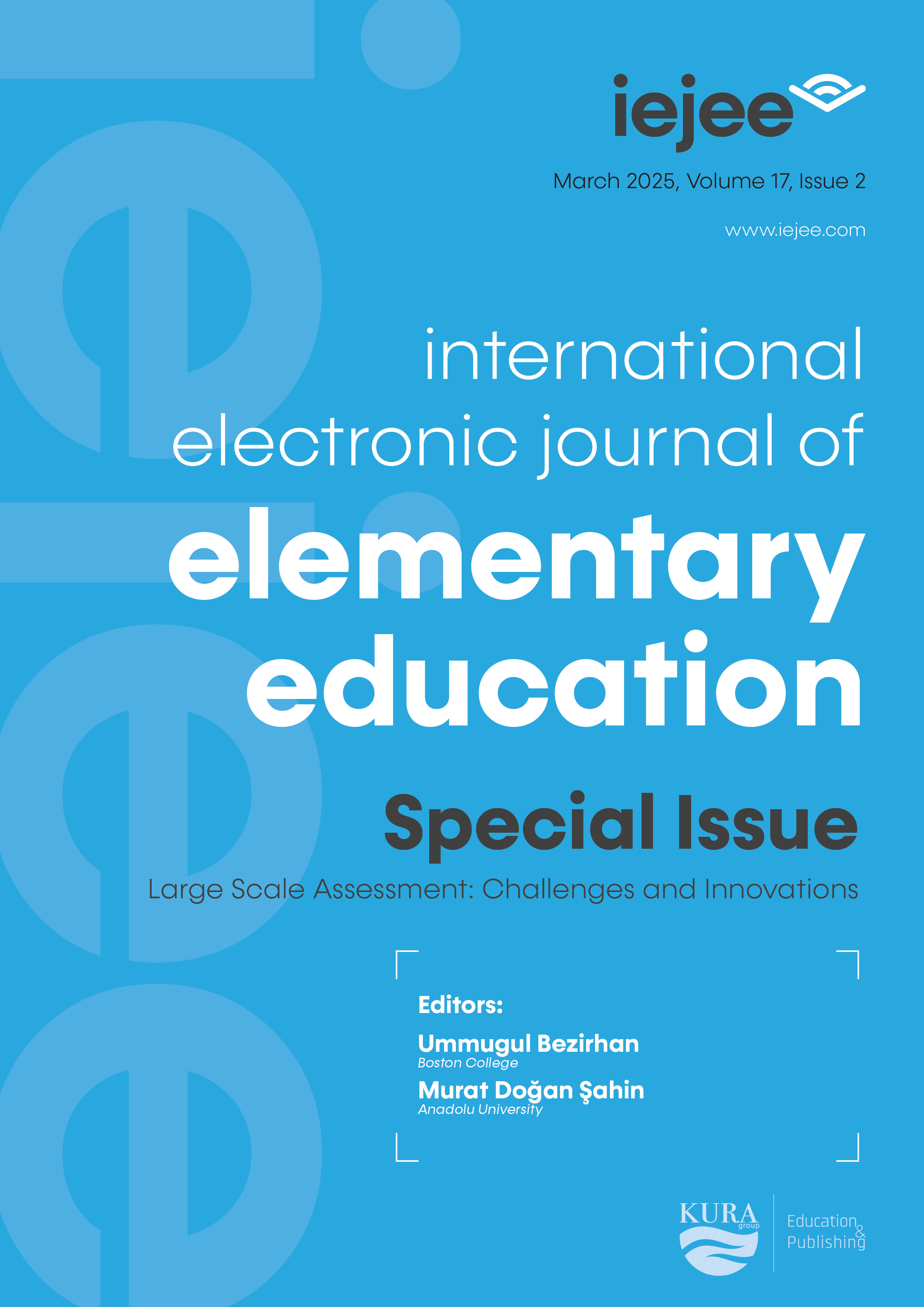
IEJEE Special Issue: Large Scale Assessment: Challenges and Innovations
Vol. 17 No. 2 (2025)Educational testing is transforming dramatically as digital platforms, data analytics, and machine learning reshape assessment practices. These advancements provide deeper insights into test-taker behavior, enhance psychometric modeling techniques, and expand our understanding of the cognitive and non-cognitive factors influencing student achievement. As educational systems worldwide embrace digital testing and artificial intelligence (AI)-driven methodologies, researchers must navigate both the opportunities and challenges... Read More
-

IEJEE Special Issue: Some Important Topics in Applied Behavior Analysis as it Relates to Autism
Vol. 15 No. 3 (2023)Dear IEJEE Readers,
It’s a great pleasure for me to present this special issue about the scientific strengths and practical challenges that characterize Applied Behavior Analysis (ABA) in our time. Near thirty active researchers within the field of autism/autism spectrum disorder (ASD) express their ideas, experiences and achievements in the field of ABA. They share their concerns about their observations in the field. Through this special issue, they are exposing themselves to the public room. They are doing this while we are celebrating AUTISM AWARENESS MONTH of April....
-

IEJEE
Vol. 14 No. 2 (2021)Dear IEJEE Readers,
Education and teaching-learning issues are among the topics on the agenda in many countries. Educational issues are complex issues. Educational decisions need research-based knowledge.
Different socio-cultural contexts need different approaches. However, the need for research-based knowledge is not different. Every single actor in the educational sector needs to be equipped by solid competence about her/his area of professional practice.
International Electronic Journal of Elementary Education (IEJEE) is acting as a peer-reviewed scientific channel for dissemination of research based-knowledge and ideas. IEJEE is a member of a global OPEN JOURNAL SYSTEM. IEJEE provides free of charge OPEN ACCESS to their readers. Elementary education is IEJEE’s central point of focus. Like the previous volumes and issues of the journal, this issue addresses several important topics and presents interesting findings and perspectives.
-

IEJEE
Vol. 14 No. 1 (2021)Dear IEEJE Readers,
While humanity is slowly leaving behind a long and tiring pandemic process, we are trying to get back to normal together. But in the process, we realize that we have new ‘normals’ left to us from the pandemic process. Masks, social distancing, different modes of communication, new regulations in schools and classrooms, transformations in distance education, etc. All these new ‘normals’ that have just entered our lives also directly affect scientific research processes....
-

IEJEE
Vol. 13 No. 5 (2021)Dear IEEJE Readers,
We are delighted to presented Volume 13, issue 4 of International Electronic Journal of Elementary Education (IEJEE) for our readers. This issue contains a range of articles as always that are insightful, focused on various aspects of our profession and our relationship with, and between, theory and practice and inquired into innovative educational perspective.
Thirty seven researchers from eleven different countries address several important educational issues like reading prosody, sex education, social hierarchy among preschool aged girls, registers of semiotic representation, social and emotional learning, teaching evidence-based subject didactics, morpheme based spelling intervention, formative and summative assessment, STEM in transition from primary school to middle school, multi-layered language policy and translanguaging space and early foreign language teaching.




1-25 of 73
Next